An Ancient Queen of Battle

Boudica

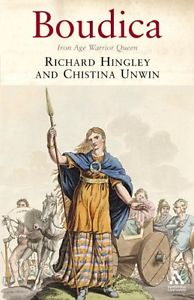
Boudica was the queen of the Celtic Iceni tribe of Southeast England in the first century. Despite Roman occupation, Boudica and her husband, Prasutagus, had semi-independence and were able to control their tribe and their region for a time. Upon the king’s death, Roman law demanded the confiscation of all of his property including his family. Boudica rebelled unsuccessfully at first. As a result, she was publicly flogged and her daughters were raped. In addition, the Romans took this opportunity to pillage all the Celtic tribes in this region.

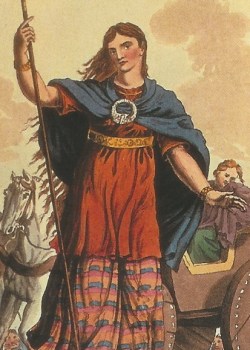
Despite Boudica’s humiliation, she united a massive army to rebel against the Romans and anyone that stood in their way. Ancient historian, Dio Cassius, stated “…the person who was thought worthy to be their leader and who directed the conduct of the entire war, was Boudica, a Briton woman of the royal family and possessed of greater intelligence than often belongs to women… In stature she was very tall, in appearance most terrifying, in the glance of her eye most fierce, and her voice was harsh; a great mass of the tawniest hair fell to her hips; around her neck was a large golden necklace; and she wore a tunic of divers colors over which a thick mantle was fastened with a brooch. This was her invariable attire.”

Boudica stood in front of her army on a chariot with her three daughters by her side before every battle. She and her army took 3 main cities but were not as skilled as the Roman soldiers. Even though Boudica’s army greatly outnumbered the Romans, approximately 80,000 people were killed because they spared no one. People had to join her army or die regardless of age or ability. In the end, the Romans lost only 400 men, while the Iceni people were essentially wiped out. No one knows exactly what happened to Boudica, but most believe she died of her wounds or killed herself after the battle.

Despite the loss of England’s ancient people, Boudica is considered an icon of national resistance in England. Prince Albert commissioned a statue of Boudica and her daughters outside of the House of Parliament.

To learn more about Boudica read Boudica: Iron Age Warrior Queen
$_35

Boudica: Iron Age Warrior Queen
It Was Illegal to Vote?

susan_b_anthony_

On November 1st, 1872, Susan B. Anthony and her three sisters demanded their right to register to vote. The registrars were shocked by this demand and initially refused until Ms. Anthony insisted that these registrars were illegally preventing her from exercising her rights as a citizen of the United States. She quoted the 14th amendment as the legal authority allowing her to vote. Needless to say, the male registrars were stunned by her forceful well-educated demands and allowed Anthony and her sisters to vote.

On November 5th, 1872, Susan B. Anthony and eight other women cast their votes. Some of the ballot inspectors argued about removing their votes from the ballot boxes but in the end they allowed the votes to be cast. The ballot inspectors knew they could not deny a registered voter the right to cast a ballot.

On November 18th, 1872, Susan B. Anthony was arrested for voting in the November 5th presidential election. She demanded that she be punished to the full extent of the law for her crime. The court refused to punish her in that manner but she continued to demand it. At her sentencing, she was asked if she had anything to say. Her response is epic to say the least.

“Yes, your honor, I have many things to say; for in your ordered verdict of guilty, you have trampled underfoot every vital principle of our government. My natural rights, my civil rights, my political rights, my judicial rights, are all alike ignored. Robbed of the fundamental privilege of citizenship, I am degraded from the status of a citizen to that of a subject; and not only myself individually, but all of my sex, are, by your honor’s verdict, doomed to political subjection under this, so-called, form of government.” (Taken from Anthony’s own account. http://ecssba.rutgers.edu/docs/sbatrial.html)

The judge repeatedly interrupted Susan B. Anthony during her response but she persisted like the amazing woman she was. The judge finally fined her $100 and the costs of prosecution. She stated in court that she would refuse to pay a single penny to the court for this unjust fine and she never did.

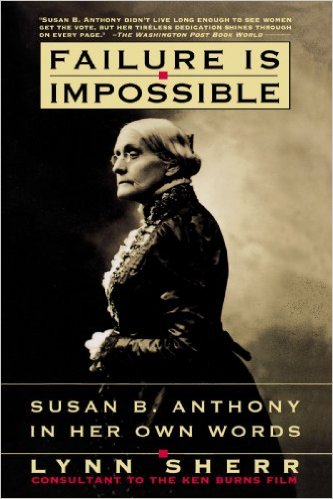
To learn more read Failure is Impossible: Susan B. Anthony In Her Own Words

51ynZyzzddL__SX331_BO1,204,203,200_

Failure Is Impossible: Susan B. Anthony In Her Own Words


Rosa Parks Was NOT the First!

elizabeth-jennings-graham-medium

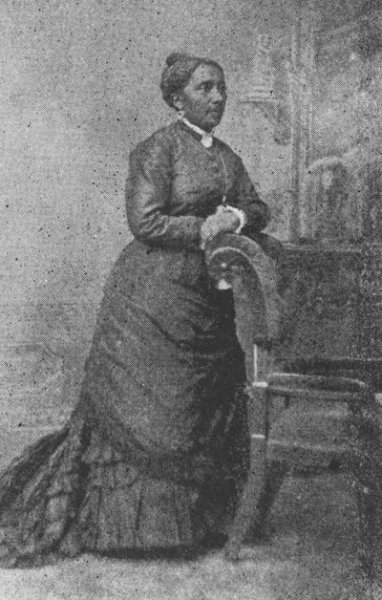
100 years before Rosa Parks refused to get off a bus, Elizabeth Jennings Graham refused to get off a New York City streetcar in 1854. At this time, Blacks were allowed to ride on streetcars as long as white passengers did not object to it. On July 16, 1854, Elizabeth and her friend Sarah Adams boarded a streetcar and were promptly told to get off by the conductor. Elizabeth refused to get off. The conductor physically grabbed her trying to throw her off the streetcar. After being physically attacked by the conductor, a police officer joined in and the two grown men threw the woman off the bus injured with her clothing in shreds. It took two grown men to throw this woman off the streetcar. Talk about physical and mental strength.
Elizabeth may have been thrown off the streetcar but she was not done fighting. First, Elizabeth wrote to Frederick Douglass and he published her letter in the New York Tribune. Then, she and her fellow church members then held a rally to protest the violence she incurred from the conductor and the police. Finally, she filed a lawsuit against the streetcar company and WON! She was awarded $225 in damages, which is equivalent to $6,428.57 today! Unfortunately, segregation legally lived on for another 110 years in America but Elizabeth Jennings was one of the many protests to demand equal rights for all people.

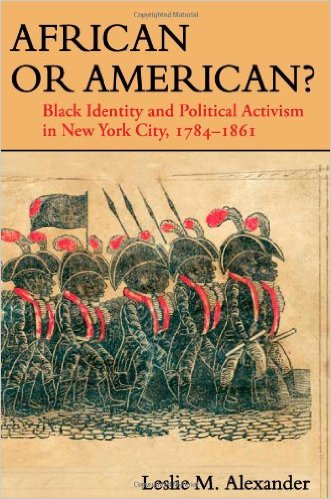
To learn about Elizabeth Jennings Graham and other brave activists click here: African or American?

51yl5D32b2L._SX329_BO1,204,203,200_

Hawaii’s Last Queen

Liliuokalaniqueen

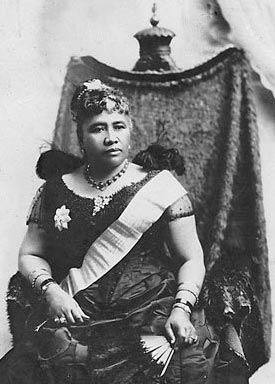
Before annexation by the American government, Queen Lili’uokalani was the last monarch of Hawaii. Her brother was the elected king of Hawaii, King Kalakaua. During King Kalakaua’s reign, a militia led by businessmen  forced the king under the threat of a bayonet  to sign a new constitution that gave extensive power to the American government and missionary-born Hawaiians. The king called this treaty the “Bayonet Constitution” and many believe that this act led to his declining health an eventual death. Queen Lili’uokalani was named as his successor.

After the Hawaiian Islands entered a recession in 1893, the queen petitioned the people for permission to rewrite the constitution and restore power to the Hawaiian monarchy. She received a windfall of approval from more than two-thirds of the population. This small act led another businessmen-led militia to overthrown the monarchy and arrest Queen Lili’uokalani. Despite the Queen’s ability to declare martial law, she chose to pacify her people and accept this fate. It is said that she would never have been able to live with herself if one drop of blood was ever shed by her people.

Monarchy loyalists planned a secret revolt in 1895, but it was quashed immediately and once again Queen Lili’uokalani was arrested. In exchange for the release of these loyalists and her, the queen relinquished her power and allowed American annexation. On the day of annexation, Queen Lili’uokalani and all her people refused to go outside on this day. It was seen as a day of mourning for the loss of Hawaii. Queen Lili’uokalani’s died 20 years later as was continuously loved by her people. For several weeks after her death, volcanoes erupted and the sea turned a strange color. Some say these were just coincidences but many believe it was Hawaii mourning the death of its queen.

Queen Liliuokalani: The Hawaiian Kingdom’s Last Monarch, Hawaii History, A BiographyQueen

Bo has nothing on Babe Didrikson!

babe-didrikson-trophy

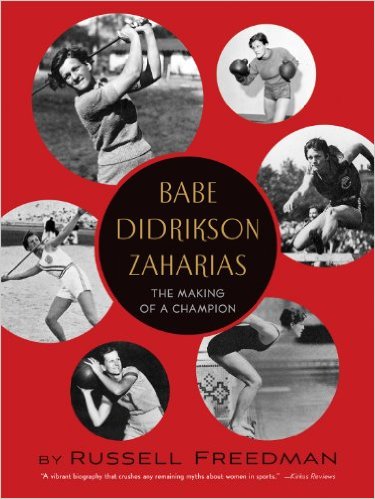
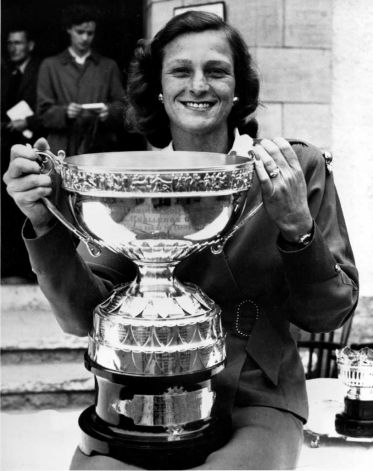
We’ve all heard that “Bo knows…” Well, Babe Didrikson puts Bo Jackson to shame as the greatest all-round female athlete of all time. She was a champion in basketball, baseball, track and field, and golf. In addition, she was a skilled bowler, roller skater, tennis master, and expert diver. Could Bo do all that? It’s doubtful.

Babe Didrikson never considered herself to be a feminist and did not speak out against sexism in larger social contexts. But, she demanded that she be recognized for her athletic skill and not her sex. Her strong personality often unfairly labeled her as “masculine” and “lacking femininity.” Despite these unfair labels, she continued to thrive and become a paragon of athletic skill.

In track and field, Babe broke three Olympic records (Yes. THREE!) in one afternoon. In addition, she won 2 gold medals and one silver. The silver was given because the judges claimed her unique jumping style did not meet the criteria yet it had never been mentioned until the final competition. It sounds fishy to me. In golf, she dominated the field for several decades and is still considered one for the greatest female golfers of all time. Not only did she with the Grand Slam twice in a row, but she also won every female title in one year which is a feat that has never been defeated. Her record goes on and on (see below).

Who wouldn’t be inspired by a woman that essentially dominated so many sports at a time when women were being labeled as too delicate to participate? She is truly an inspiration.

If you’d like to read more about Babe Didrikson, I recommend Babe Didrikson Zaharias: The Making of a Champion by Russell Freedman.

Babe Didrikson Zaharias: The Making of a Champion

The list that follows is courtesy of http://www.babedidriksonzaharias.org.

Basketball

  • All-American– with the Employer’s Casualty Company (ECC) 1930, 1931, & 1932

Track and Field

  • 80 METER HURDLES
    • 1931 American Athletic Union (AAU) record of 12 sec, not broken for 18 years. 1932 Olympic/world record of 11.7 sec until the 1936 games.
  • JAVELIN
    • 1932 AAU record 139’3” and Olympic record throw of 143’4”, which stood until the 1936 games.
  • HIGH JUMP
    • 1932 Olympic/world record 5’5¼” held with Shiley for 6 years worldwide, 16 years as an Olympic record, and 23 years as a U.S. record.
  • LONG JUMP
    • 1930 unofficial world record of 18’8” because in the same AAU meet, Stella Walsh jumped ½” farther.
  • BASEBALL THROW
    • 1931 AAU/world record of 296’ still stands today, since the event was discontinued in 1957.

Golf

  • First American to win the British Women’s Amateur
  • First woman to win both the British and U.S. Women’s Amateur (1947)
  • First woman to win the Western Women’s Open three times (as an amateur and professional)
  • Only woman to qualify (so far)  for the Los Angeles Open, a men’s tournament (1938)
  • Won 82 golf tournaments, including amateur and professional
  • The leading money-winner on the tour for four years in a row – 1948 through 1951
  • Won the Grand Slam in 1948 (All-American Open, World Championship and the U.S. Women’s Open)
  • Won the Grand Slam, the Titleholders, 144-hole Weathervane AND Women’s Western Open in 1950, which is a feat that has never been beaten
  • Won the All-American Open, World Championship, Ponte Vedra Open, Tampa Open, Fresno Open, and Texas Open-1951
  • Won the World Championship 3 times in order to keep the “Dead Head” Trophy, but actually won it four times in 1948, 1949, 1950, and 1951
  • One of two players (Louise Suggs) to win both the U.S. Women’s Amateur and U.S. Women’s Open
  • Won the Women’s Open-Salem  in 1954 by 12 strokes, which is the biggest victory margin and has been tied but never broken
  • Won the Vare Trophy in 1954 with a 75.48 average

Babe claimed to win 17 tournaments in a row

She actually won these 3 in 1946: 

  1. Trans-Mississippi-Denver, beat Polly Riley in finals, 6 & 5.
  2. Broadmoor Invitational-Colorado Springs, beat Dot Kielty 6 & 4.
  3. All-American Championship at Tam O’Shanter, 310 (medal play).

 She had one loss, then her 14 amateur victories in a row from 1946-47 are: 

  1. U.S. Women’s Amateur-Tulsa, beat Clara Callender Sherman 11 & 9 for the biggest margin in the history of the tournament.
  2. Texas Women’s Open, beat Betty Hicks 5 & 3.
  3. Tampa Women’s Open, won by five strokes.
  4. Helen Lee Doherty Women’s Amateur-Miami, beat Margaret Gunther 12 & 10. Qualified eight below women’s par with 68 and four under men’s par.  Babe was only one stroke off the men’s record for the course.
  5. Florida Mixed Two-Ball, Partnership with Gerald Walker, won on 31st hole.
  6. Palm Beach Women’s Amateur, beat Jean Hopkins, 1 up.
  7. Women’s International Four-Ball-Hollywood, FL, with Peggy Kirk, beat Louis Suggs and Jean Hopkins in 18 hole playoff, 4 & 2.
  8. South Atlantic Women’s Championship-Ormond Beach, FL beat Peggy Kirk 5 & 4.
  9. Florida East Coast Women’s Championship-San Augustine, beat Mary Agnes Wall 2 & 1.
  10. Women’s Titleholder-Augusta,  overcame 10 stroke lead by Dorothy Kirby to win with 304, by five strokes.
  11. North and South Women’s Amateur- Pinehurst, beat Louise Suggs on 2nd extra hole.
  12. National Celebrities in Washington, DC
  13. British Women’s Amateur-Gullane, Scotland, beat Jacqueline Gordon.
  14. Broadmoor Match Play, beat Dot Kielty 10 & 9.

Were There Women in the Continental Army?

Picture1

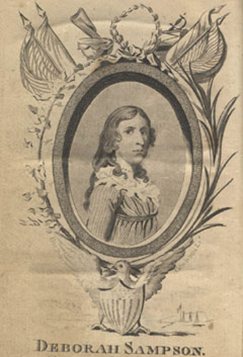
In 1782, Deborah Sampson disguised herself as a man and enlisted in the Continental Army during the Revolutionary War. She was considered very tall and was easily mistaken for a man. Other soldiers even teased her for never having to shave. They assumed she was too young to have facial hair.

Sampson was wounded in a battle near Tarrytown, New York. She was afraid of being discovered, so she tended to her own wounds but her leg never healed properly. She was finally hospitalized and a doctor discovered she was a woman. The doctor kept her secret and finally but eventually the commanding general. Instead of being punished, she received an honorable discharge from the Army by General Henry Knox. She was discharged from the Army at West Point on October 25, 1783.

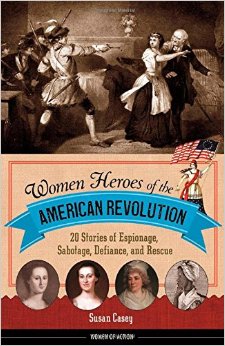
If you want to learn more about women of the American Revolution, I recommend the book Women Heroes of the American Revolution: 20 Stories of Espionage, Sabotage, Defiance, and Rescue (Women of Action).


Women Heroes of the American Revolution: 20 Stories of Espionage, Sabotage, Defiance, and Rescue (Women of Action)

An Essential Female Voice in the Disney Corporation

Mary photosm

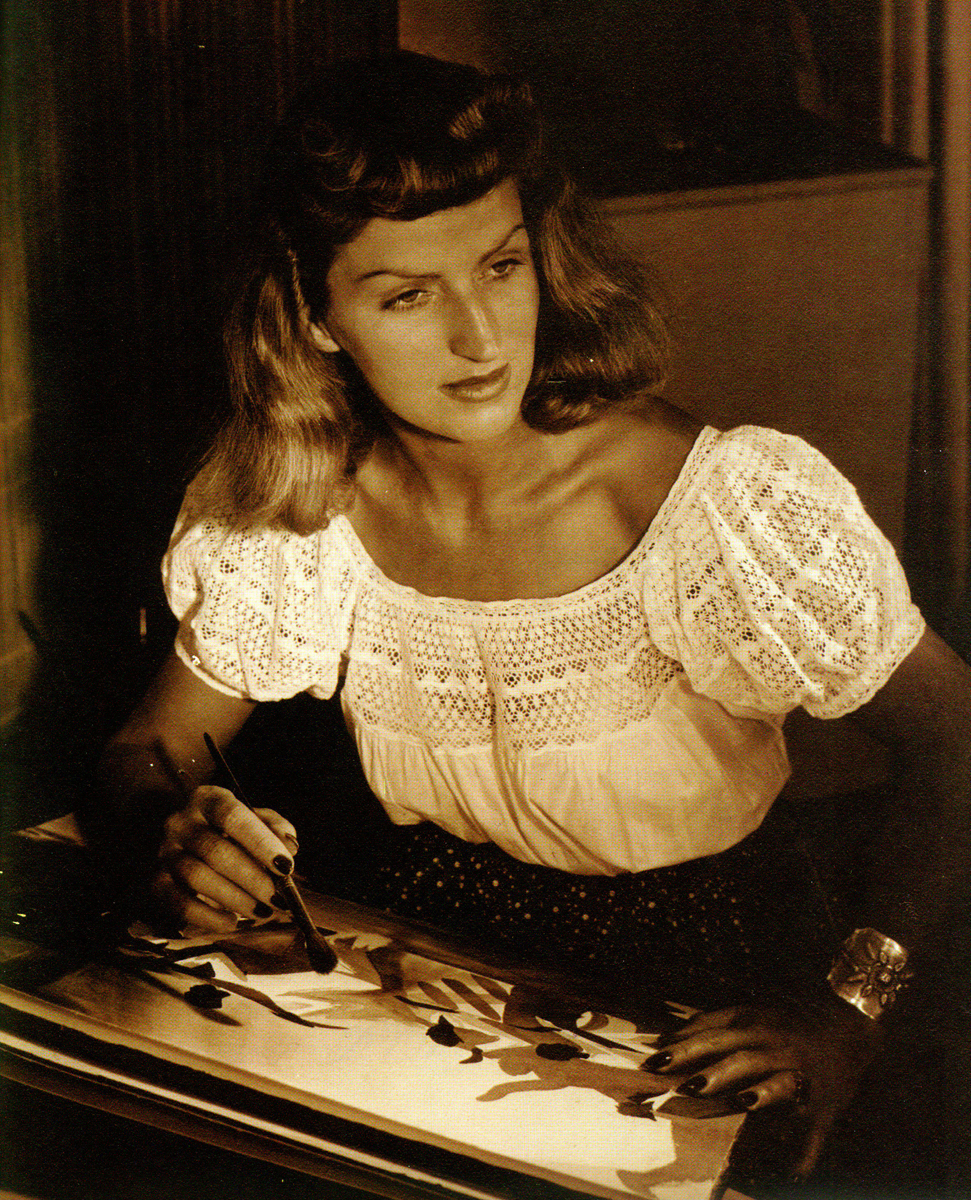
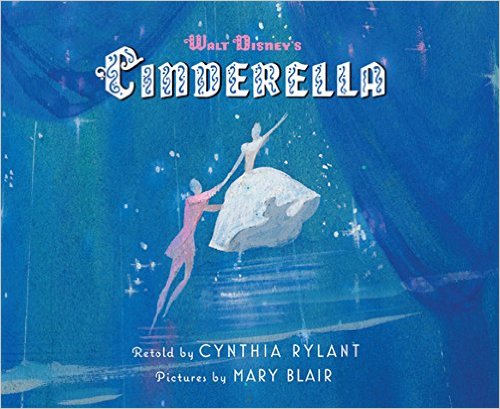
At a time when the vast majority of Disney animators were men, Walt Disney himself referred to Mary Blair as his favorite. Her work was unlike any other animator and regarded as true works of art. She was integral in helping add whimsy and life into many Disney characters such as Peter Pan, Cinderella, Alice in Wonderland, etc. In addition to her animation, she became the primary graphic designer for Disney’s advertising. She is also credited as the key designer of It’s a Small World.

To learn more about Mary Blair and her GORGEOUS artwork read The Art and Flair of Mary Blair (Updated Edition): An Appreciation (Disney Editions Deluxe).

The Art and Flair of Mary Blair (Updated Edition): An Appreciation (Disney Editions Deluxe)

Cinderella happens to be my most FAVORITE Disney movie and this print version is EXQUISITE! I urge you to check out Walt Disney’s Cinderella (Reissue) (Walt Disney’s Classic Fairytale) picture book for the artwork alone.
Walt Disney's Cinderella (Reissue) (Walt Disney's Classic Fairytale)
Walt Disney’s Cinderella (Reissue) (Walt Disney’s Classic Fairytale)

Our Founding Mother

Abigail Adams

Did you know that John Adams’ wife regularly asked her husband to include women in his political writings as the United states was being formed?

During 1775 and 1776, Abigail Adams repeatedly wrote to her husband about the need for women to be included in the Declaration of Independence. She was the wife of John Adams who later became the second president of the United States. John and Abigail were famous for writing long letters to each other while John was away on government business. While her husband John was working on the Declaration of Independence, she wrote to remind him that women “will not hold ourselves bound by laws which we have no voice.”

Even though much of her voice was not physically added to the Declaration of Independence or the Constitution, she was highly influential in trying to gain rights for women long before Women’s Suffrage.

Read more of her letters in The Letters of John and Abigail Adams

The Letters of John and Abigail Adams

Beaten Down by a Woman???

Juana Galan

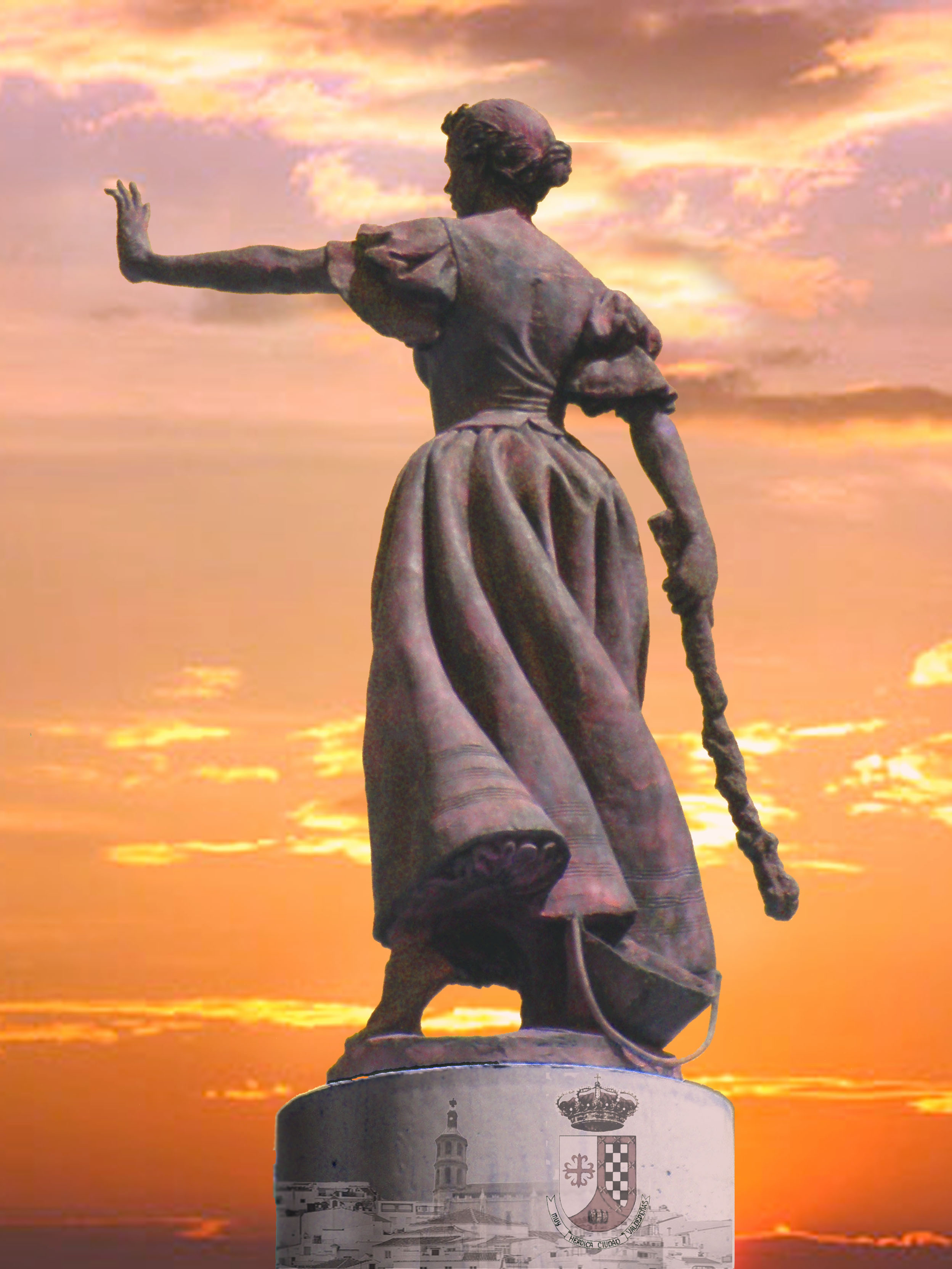
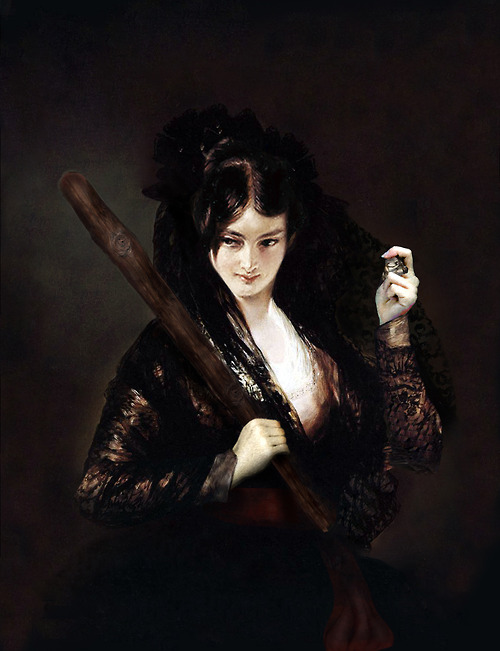
Have you ever heard of an entire army being beaten off by a woman with a baton?

In 1808, Napoleon began invading Spain. On June 6th, 20 year old barmaid, named Juana Galan, found her village being encroached upon by French soldiers. She quickly organized the women of her village to devise a trap for the invading French Army. At this time, the local men were off fighting the French in other areas.

When the French Army arrived, the women dumped boiling water and oil on the soldiers. Then, Juana Galan proceeded to beat back the army with only a baton. The French retreated and basically abandoned attacking the entire province of La Mancha which led the Spanish to victory. 

Today, Juana Galan is seen as a symbol of feminism, patriotism, and resistance.

Read more about her here: http://standrewshistorysociety.co.uk/2014/05/galan/

OLYMPUS DIGITAL CAMERA